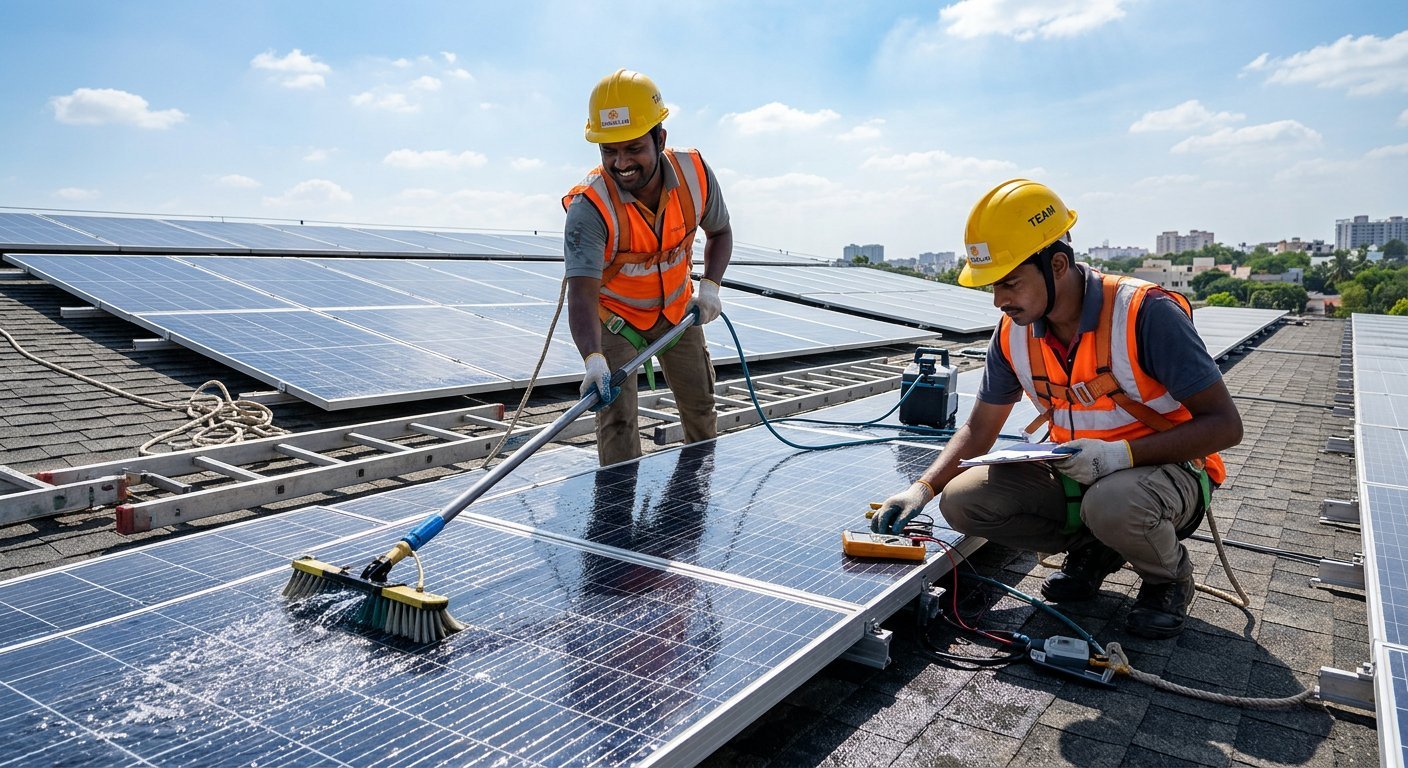
Owners usually notice a problem the month the bill comes. Before you blame the hardware, work through this checklist in order — most generation shortfalls are found in the first four items.
1. Dust, bird droppings and streaks
Compare a clean module with a soiled one after sunrise; the difference is often visible. Soiling typically accounts for 8–15% in Maharashtra. Cost to fix: one cleaning visit.
2. New shading that was not there before
Trees grow, neighbouring buildings appear, a water tank is installed, or a new water heater is placed on the terrace. Even partial shading of a few cells disproportionately reduces a whole string’s output.
3. Inverter derating and error codes
Check the inverter display or app for error history. Common causes: over-temperature derating due to blocked ventilation, grid voltage excursions, DC earth faults and firmware issues. Note the error codes before calling service.
4. Monitoring and connectivity faults
Often the system is generating fine but the app data is stale. Verify with the inverter display or the DISCOM meter’s export register before assuming hardware failure.
5. String imbalance or a failed string
One string producing zero while another works normally points to an open circuit — a loose MC4, a blown fuse or a module junction box failure. This requires a multimeter and a competent technician.
6. Blown DC/AC fuses and tripped protection devices
A properly designed system has fuses, surge protection and an RCCB. A tripped device looks exactly like an inverter fault from the outside.
7. Earthing and insulation degradation
Poor earthing raises the risk of inverter trips and of damage during lightning. Annual earthing resistance measurement is part of a real AMC.
8. Seasonal expectation error
December and July generation is genuinely 20–30% lower than March–April in Maharashtra. Compare year-on-year months, not consecutive months.
9. Oversized expectations from the proposal
Some proposals quote peak-summer generation as an annual average. Check the promised annual figure per kW against a realistic 1,400–1,550 kWh per kW per year for Maharashtra.
10. Design and installation faults
Undersized DC cables, long mismatched string runs, modules mounted flat without drainage gaps, or an inverter oversized relative to the array — these reduce yield permanently and are the hardest to fix later. This is why engineering before installation matters more than any component brand.
What to do next
Note the month-wise generation from the monitoring portal, record the inverter error log, photograph the array and shading, and have a technician perform a thermal scan and string current check. We offer a paid health audit with a written defect list — and an AMC takeover option if your original installer is unreachable.
Solar engineer at EcoHarbor Solar Share on WhatsApp
Need a quotation?
Our engineers will size a system for your exact roof and send a written proposal with subsidy and payback.
Book free surveyEstimate your savings
Use our calculator to see recommended kW, subsidy, net cost and 25-year savings in 10 seconds.
Open calculator